Table of Contents
- Why Pakistan for Apparel Manufacturing?
- What Makes Sialkot Pakistan's Manufacturing Capital?
- How to Find Apparel Manufacturers in Pakistan
- What Certifications to Look For
- Red Flags to Watch For
- How to Vet a Pakistan Manufacturer (Step by Step)
- What to Ask Before Placing Your First Order
- Understanding Pakistan Apparel Pricing
- Why Al Wahab Global for Your Brand
Why Pakistan for Apparel Manufacturing?
Pakistan is the world's fourth-largest cotton producer and consistently ranks among the top five global textile and apparel exporters, generating over $16 billion in textile exports annually. The industry employs approximately 40% of the country's industrial workforce, meaning garment manufacturing is not a secondary activity but the central pillar of Pakistan's industrial economy. This has created a deep concentration of skill, supply chain infrastructure, and institutional knowledge that simply cannot be replicated in newer manufacturing markets.
The cost advantage is real and significant. Average factory labor costs in Pakistan are $200-400 per month compared to $600-800 in China and $350-600 in Bangladesh for comparable skill levels. Pakistan's proximity to major cotton-growing regions (Punjab province is home to the Cotton Belt) means fabric supply chains are tight, domestic fabric mills are abundant, and fabric logistics add minimal lead time. For performance fabrics sourced from South Korea or Taiwan, Karachi's port provides efficient import logistics.
Pakistan also benefits from GSP+ trade status with the European Union — a preferential trade arrangement that allows Pakistani goods to enter EU markets with zero or reduced import duties, a significant competitive advantage over countries like China and Vietnam for brands selling to German, French, Dutch, and other EU markets. For US-bound goods, Pakistani apparel faces standard Most Favored Nation tariffs, but the manufacturing cost advantage typically more than offsets the duty difference versus China. Additionally, Pakistan's time zone (PKT, UTC+5) creates an advantageous overnight production cycle for European and American buyers — design questions sent at close of business in London or New York receive responses and action before the next business day begins.
What Makes Sialkot Pakistan's Manufacturing Capital?
Sialkot is a city of approximately 700,000 people in Punjab province that has achieved a remarkable status in global manufacturing: it is the world's dominant producer of soccer balls (supplying an estimated 70-80% of global production, including balls used in FIFA World Cups), the world's leading source of surgical instruments, and a major producer of sportswear, activewear, and precision-sewn apparel. This industrial concentration didn't happen by accident — it developed over more than a century of skilled craft tradition, investment in vocational training, and a self-reinforcing ecosystem of suppliers, manufacturers, and export infrastructure.
For apparel brands, Sialkot offers a specific combination that's difficult to find elsewhere: precision sewing skills developed through decades of producing technically demanding sports goods and surgical instruments, a dense cluster of certified OEM manufacturers competing for international business, strong English-language business communication (Sialkot's manufacturers have been dealing with international buyers since the 1960s), and well-developed export logistics through Lahore's Allama Iqbal International Airport and Karachi's port. The city's Sialkot Chamber of Commerce and Industry (SCCI) and the Pakistan Readymade Garments Manufacturers and Exporters Association (PRGMEA) provide institutional support and maintain manufacturer directories.
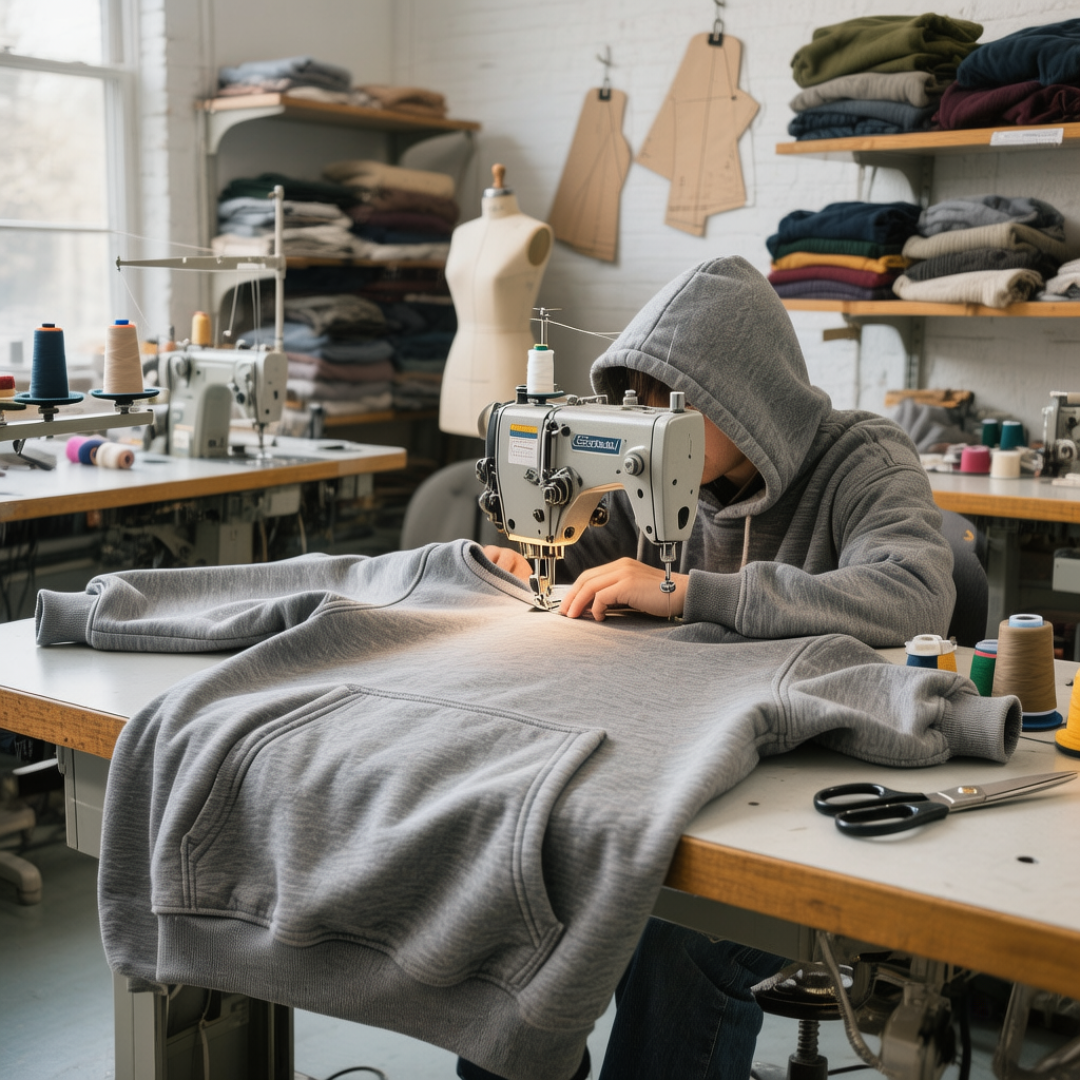
Sialkot's precision stitching tradition — developed over a century of technical manufacturing excellence.
How to Find Apparel Manufacturers in Pakistan
There are five proven methods for finding reputable apparel manufacturers in Pakistan, each with different trade-offs in terms of effort, cost, and quality of connection:
1. Alibaba.com — The most accessible starting point for international buyers. Search "apparel manufacturer Pakistan" or "OEM clothing manufacturer Sialkot" and filter for Verified Gold Suppliers (these have been physically audited by third-party inspectors). Check transaction volume, response rate, and read recent buyer reviews. Alibaba's Trade Assurance program provides payment protection for buyers. Be aware that some listings are trading companies representing multiple factories — you can request confirmation of factory ownership directly.
2. International Trade Shows — ISPO Munich (winter sports and outdoor), Magic Las Vegas (fashion and lifestyle), A+A Dusseldorf (workwear and personal protection), and Texworld Paris all attract Pakistani manufacturers seeking international buyers. Meeting a manufacturer face-to-face, seeing physical samples, and establishing a personal relationship at a trade show accelerates the trust-building process significantly. The investment in a trade show trip can be returned many times over in better manufacturer selection.
3. Industry Referrals — The most reliable source. If you can connect with other brand founders who are already manufacturing in Pakistan, their direct experience is invaluable. Brand owner communities on Facebook (search "clothing brand owners" or your niche — "activewear founders", "streetwear brand builders"), Discord servers, and Reddit communities (r/streetwear, r/femalefashionadvice, r/entrepreneur) often have members who will share manufacturer recommendations and warnings. The quality of a referral from a satisfied customer exceeds any amount of platform review research.
4. Direct Outreach — Google "OEM apparel manufacturer Sialkot Pakistan" and browse factory websites directly. LinkedIn searches for "apparel manufacturer Pakistan" surface company pages and individual sales contacts. Direct outreach to a factory's website or LinkedIn often connects you to a more senior contact than a platform inquiry, and allows you to assess communication quality directly from the first interaction.
5. Trade Associations — Pakistan Readymade Garments Manufacturers and Exporters Association (PRGMEA) and the Sialkot Chamber of Commerce and Industry (SCCI) both maintain searchable directories of member manufacturers, all of whom are formally registered businesses with export experience. These directories are less convenient than Alibaba but the manufacturers listed are legitimate established businesses.
What Certifications to Look For
Certifications are the single most objective signal of a manufacturer's seriousness and professionalism. Any manufacturer who cannot provide current certification documents in PDF format is either not certified or being evasive — both of which are disqualifying. Here are the certifications that matter and what they tell you:
ISO 9001:2015 — The international quality management standard. An ISO-certified manufacturer has documented quality procedures, conducts internal audits, tracks defects and improvement actions, and has had all of this independently verified by an accredited certification body. This is the minimum baseline for any manufacturer you should work with. If they're not ISO 9001:2015 certified, walk away.
OEKO-TEX Standard 100 — Confirms that the fabrics and finished products have been tested for harmful substances including heavy metals, pesticides, carcinogenic dyes, and formaldehyde. Required by many US and EU retailers (including Amazon's own private label products), increasingly expected by environmentally conscious consumers, and a strong signal of fabric quality control. Essential if you're selling to European markets where consumer protection standards are stringent.
GRS 4.0 (Global Recycled Standard) — Required if your brand uses or claims recycled content (recycled polyester, recycled nylon). GRS-certified manufacturers can provide verified documentation of recycled material sourcing. If sustainability is a brand pillar, this certification is non-negotiable for credibility.
BSCI / Sedex — Both are ethical labor auditing programs. A BSCI or Sedex audit assesses working conditions, wages, hours, freedom of association, and child labor. Required by large retail buyers (H&M, Zalando, ASOS) and increasingly important to brand-conscious customers. If you plan to wholesale to major retailers, check their supplier requirements early.
Al Wahab Global certifications: We hold ISO 9001:2015, OEKO-TEX Standard 100, GRS 4.0, and are an Alibaba Verified Supplier. All certification documents are available as PDFs on request. We sign NDAs before reviewing any customer designs as standard practice.
Red Flags to Watch For
The risk of sourcing from an unverified manufacturer in Pakistan (or anywhere) is real — and the red flags are usually visible before you place an order if you know what to look for. The most serious warning signs:
How to Vet a Pakistan Manufacturer (Step by Step)
Once you've found a manufacturer that looks promising, here's the verification process that will protect you before you commit any significant money:
Step 1: Request facility photos and video. Ask for a video walk-through of the production floor, cutting room, and finishing area. This should be current footage — not marketing materials. A WhatsApp video call direct to the factory floor is even better and takes 10 minutes.
Step 2: Request all certifications as PDFs. ISO 9001:2015, OEKO-TEX, and any others they claim. Check the validity date on each certificate. Cross-reference the company name and address on the certificate against the company you're dealing with.
Step 3: Request client references. Ask for contact details for 2-3 current clients, ideally in your market (USA, UK, etc.). A quick email or LinkedIn message to a reference asking about their experience takes minutes and provides genuine insight.
Step 4: Order a sample before committing to bulk. Never place a bulk order without an approved sample. The sample process also tests the manufacturer's communication, timeline adherence, and attention to detail. If the sample process is disorganized, the bulk order will be worse.
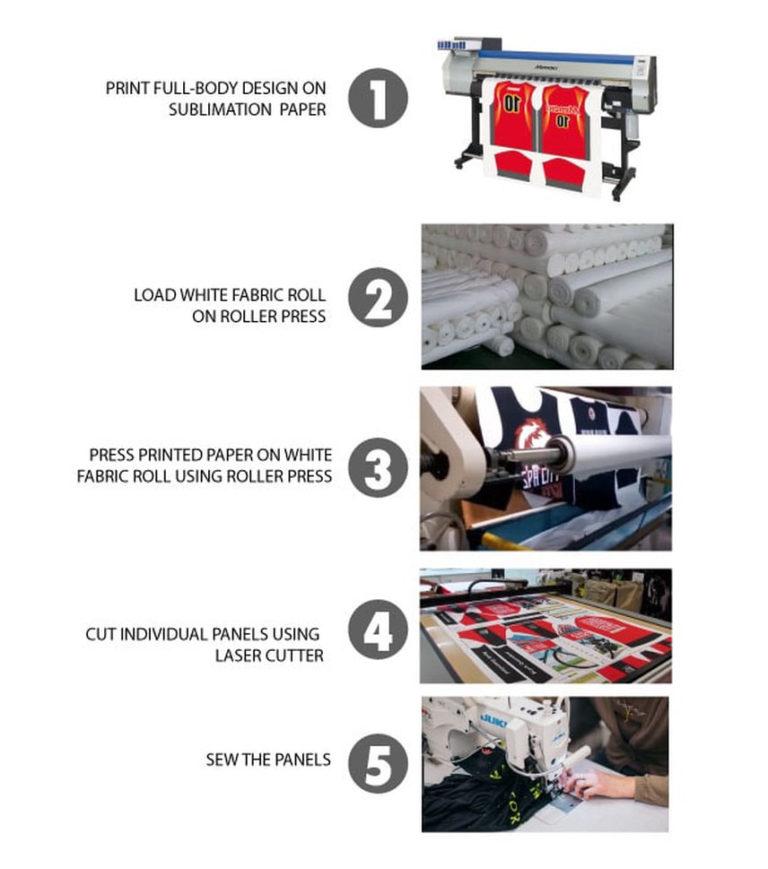
Production floor at Al Wahab Global, Sialkot — inline QC at every stage of manufacturing.
Step 5: Video call the production floor. Schedule a video call specifically to see the production floor, meet the production manager, and ask specific questions about lead times and capacity. This is standard practice in the industry and any professional manufacturer will accommodate it.
Step 6: Check Alibaba transaction history. If they're on Alibaba, check transaction volume and buyer feedback. Look for patterns in negative reviews — isolated issues are normal; systematic complaints about quality or communication are disqualifying.
Step 7: Start with your minimum order. Even after thorough vetting, start with the minimum order (10 pieces at Al Wahab Global). This establishes the relationship with real stakes, validates their production quality at scale, and limits your financial exposure while trust is being built.
What to Ask Before Placing Your First Order
These eight questions should be answered clearly before you commit to any manufacturer. A professional manufacturer will answer all of them directly and without hedging:
- What is your minimum order quantity per style? (Confirm whether MOQ applies per colorway as well.)
- What is the typical sampling timeline? (7-10 business days is standard at Al Wahab Global; longer is acceptable for complex styles.)
- What is the bulk production lead time after sample approval? (2-4 weeks standard; 4-6 weeks for complex technical garments.)
- What are your standard payment terms? (50% deposit, 50% before shipment is industry standard.)
- Can you provide your ISO 9001:2015 and OEKO-TEX certification documents?
- What does your quality inspection process include? (Look for inline checks and AQL standard final inspection.)
- Can you provide custom labels, hang tags, and packaging? (Any full-service OEM manufacturer can.)
- What are your shipping options and can you ship DDP? (DDP simplifies importing enormously for new brands.)
Understanding Pakistan Apparel Pricing
Pakistan's manufacturing cost advantage over China, Vietnam, and Bangladesh is real and meaningful — but understanding where costs come from helps you evaluate quotes correctly and negotiate from a position of knowledge. The primary driver of Pakistan's cost advantage is labor: factory workers in Sialkot earn $200-400 per month, compared to $600-800 in coastal China and $350-550 in Vietnam. For labor-intensive garments (sportswear with heavy seaming, embroidery, complex construction), this difference compounds significantly into the final unit price.
A typical mid-complexity hoodie at 50-unit quantity has the following cost structure: fabric 45% (cotton-polyester fleece, 320 GSM, including fabric wastage during cutting); labor 20% (cutting, sewing, overlocking, finishing, ironing, folding); overhead 15% (factory electricity, equipment depreciation, management, QC staff); trims and labels 10% (zippers, drawcords, woven labels, care labels, poly bag); manufacturer margin 10%. The resulting factory price might be $12-14. Adding DDP shipping to the USA (typically $3-6 per piece for small express orders, dropping to $1-2 per piece at sea freight LCL volumes) brings the total landed cost to $15-20 for a quality, custom-branded hoodie.
Understanding this cost structure helps you evaluate whether a quote is realistic. A hoodie quoted at $6 DDP to the USA is mathematically impossible at legitimate quality standards — something is being cut (fabric quality, labor, finishing) or you're being given a bait price that will increase once you're committed. A quote of $13-18 for a custom-designed hoodie with private label branding at 10-50 units is market rate for a quality certified manufacturer in Sialkot.
Why Al Wahab Global for Your Brand
Al Wahab Global has been manufacturing in Sialkot, Pakistan since 2010 — 14+ years of focused OEM and private label production for brands across the USA, UK, Germany, Australia, Canada, and the UAE. In that time, we have helped launch more than 500 clothing brands, from first-time founders launching with 10 pieces to established multi-million dollar brands ordering 10,000+ units per season. Our customer relationships span activewear, streetwear, team sports uniforms, outdoor apparel, and bags.
Our certifications are current and documented: ISO 9001:2015 (quality management, independently audited annually), OEKO-TEX Standard 100 (fabric safety — all fabrics we use are tested and certified), GRS 4.0 (recycled content verification for sustainable brands), and Alibaba Verified Supplier status. We are members of PRGMEA and SCCI. Every customer relationship begins with an NDA — signed before we review any design document.
Our production capabilities cover the full range of apparel categories: cut-and-sew activewear (leggings, sports bras, shorts, joggers), fleece and jersey streetwear (hoodies, crewnecks, sweatpants, oversized tees), outerwear (softshell jackets, puffer vests, track jackets), team sports uniforms (football, basketball, cricket, running), and sports bags and backpacks. We operate our own embroidery department, sublimation printing facility, and screen printing capability in-house, eliminating subcontractor delays for decoration work.

Full private label branding capability — from woven labels to custom packaging, everything produced in-house.
Ready to Source from Pakistan?
Get in touch with our team to discuss your product, MOQ, and timeline. No commitment required — we start with a conversation, then a sample.
Frequently Asked Questions
Is Pakistan good for clothing manufacturing?
What is the minimum order for Pakistan manufacturers?
How long does shipping from Pakistan take?
How much does custom clothing manufacturing cost in Pakistan?
What certifications should a Pakistan manufacturer have?
Is it safe to send designs to a Pakistan manufacturer?
Can Pakistani manufacturers ship directly to Amazon FBA?
What is the best city in Pakistan for garment manufacturing?

Bilal has helped 500+ brands source from Sialkot, Pakistan to markets across the USA, UK, Europe, and Australia. He writes about manufacturing strategy, supply chain, and the global apparel industry.